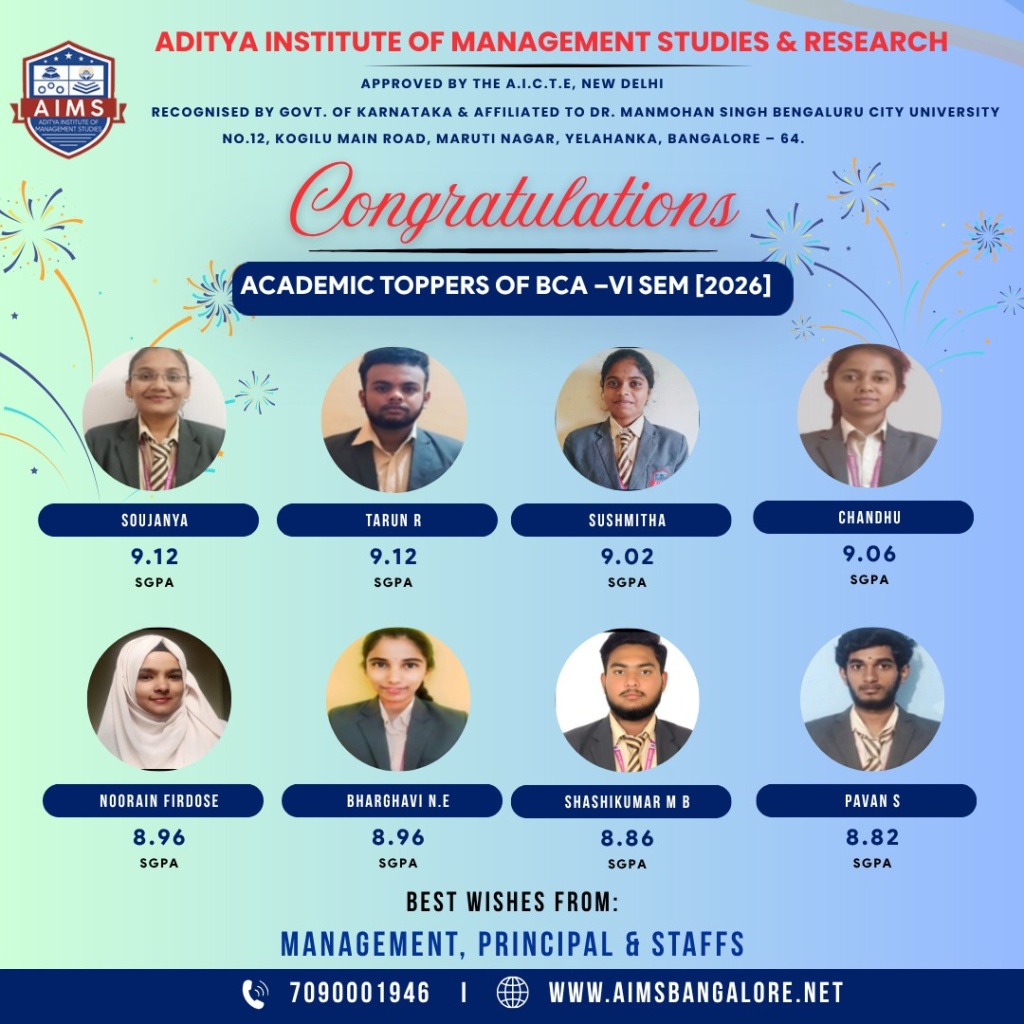
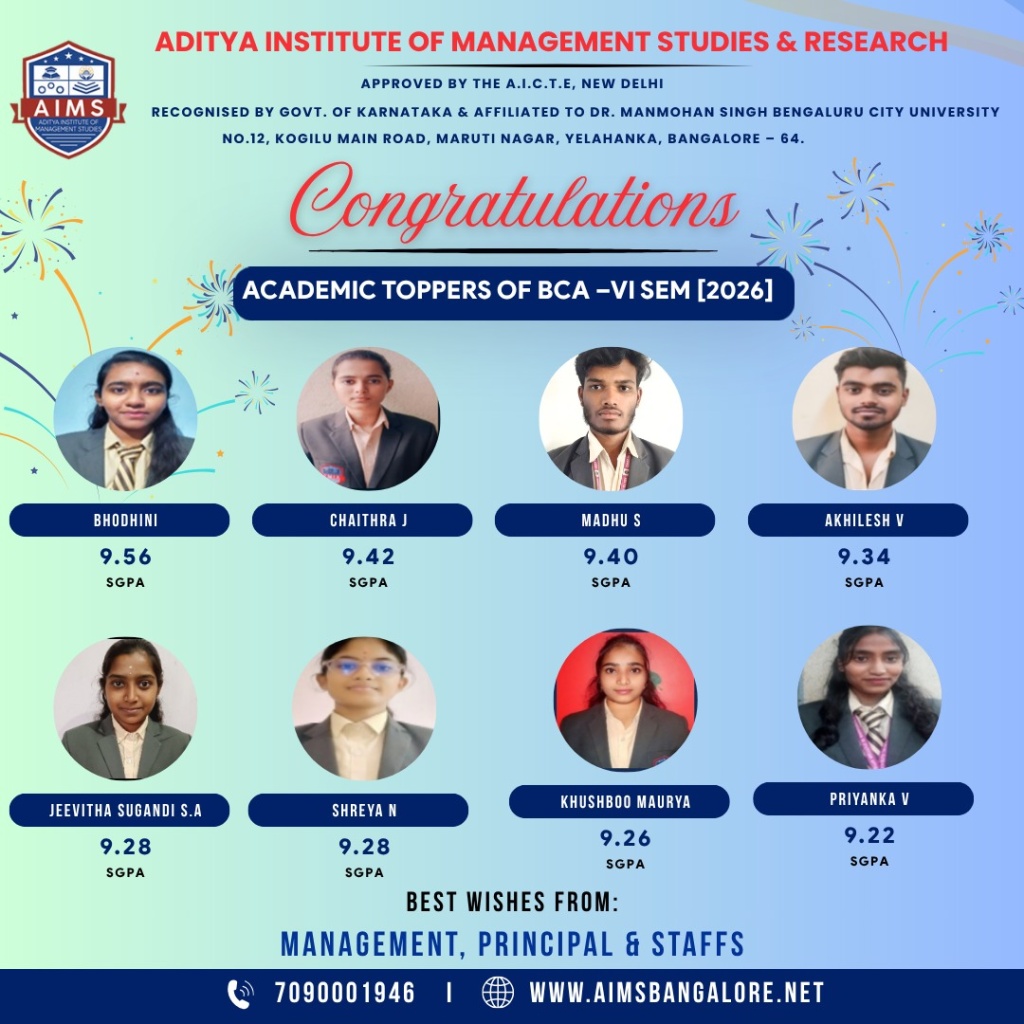
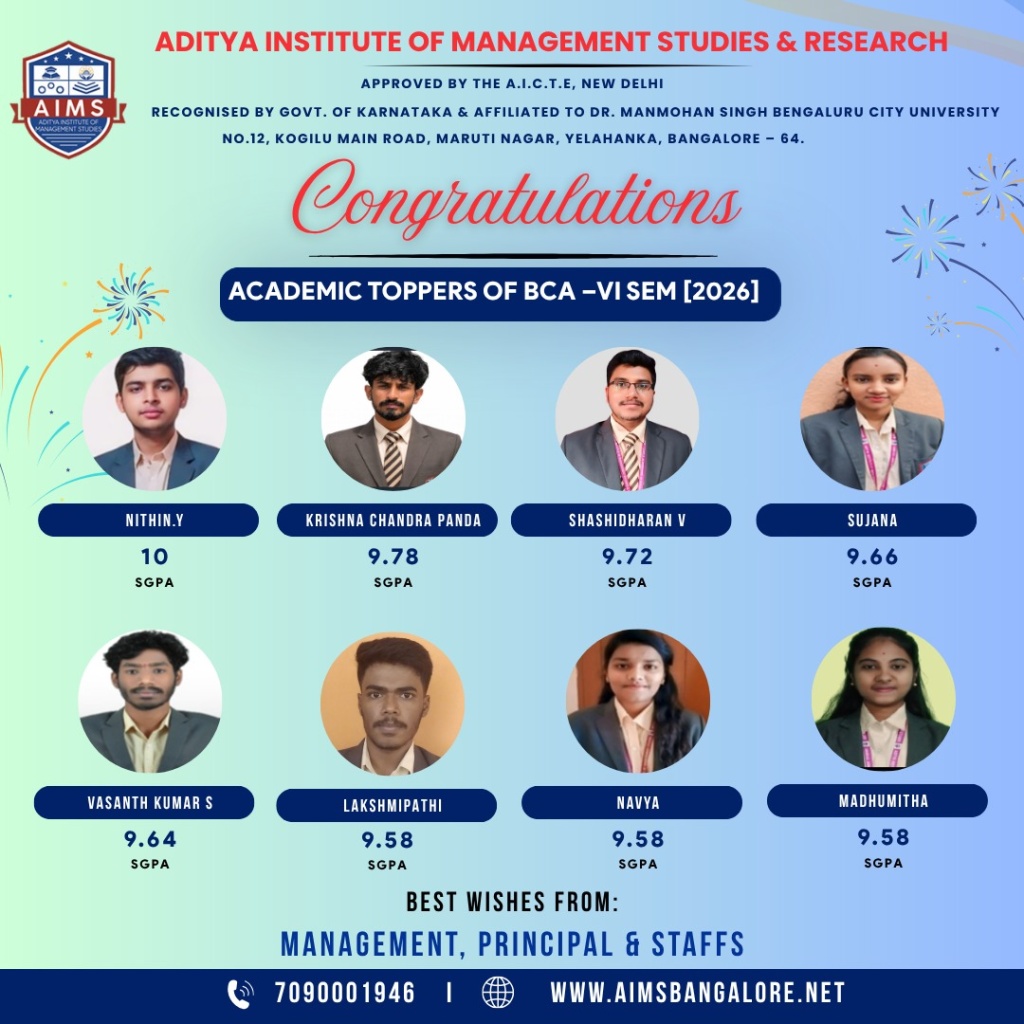
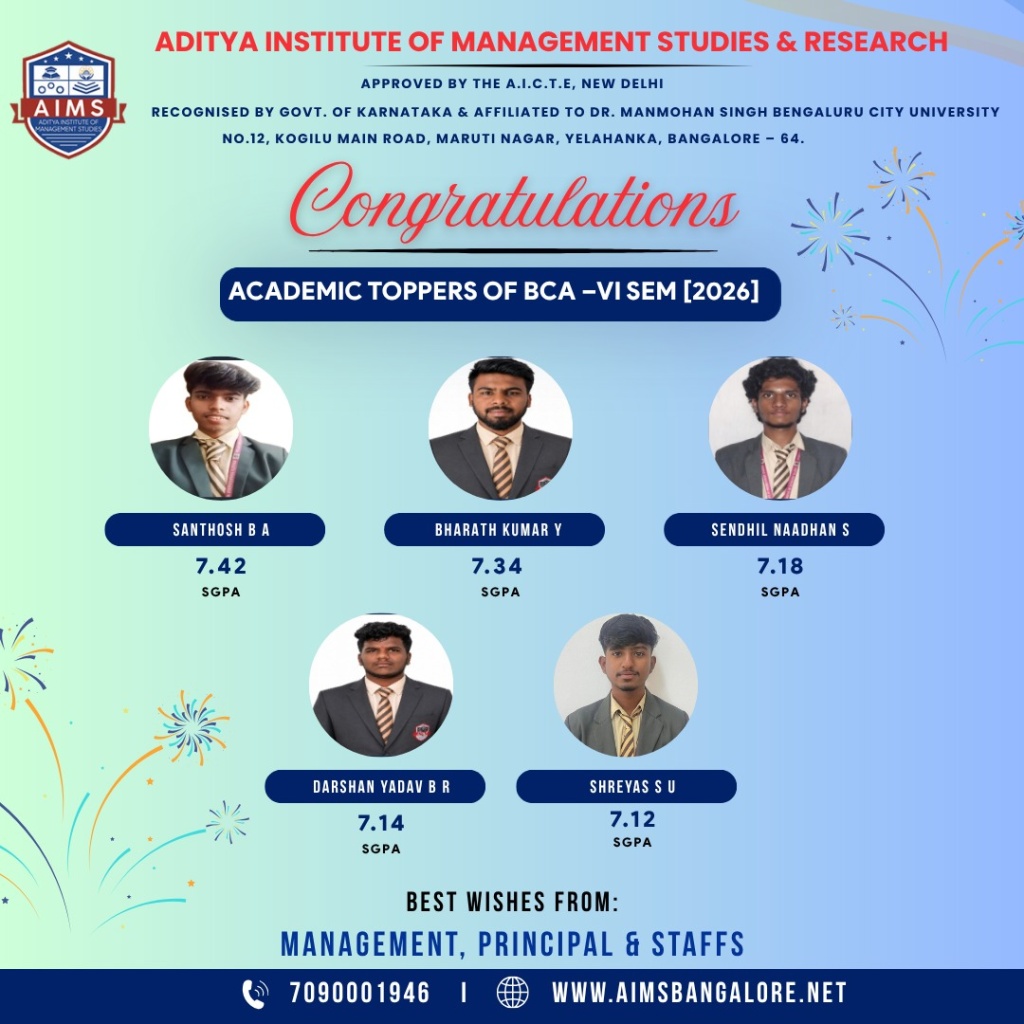
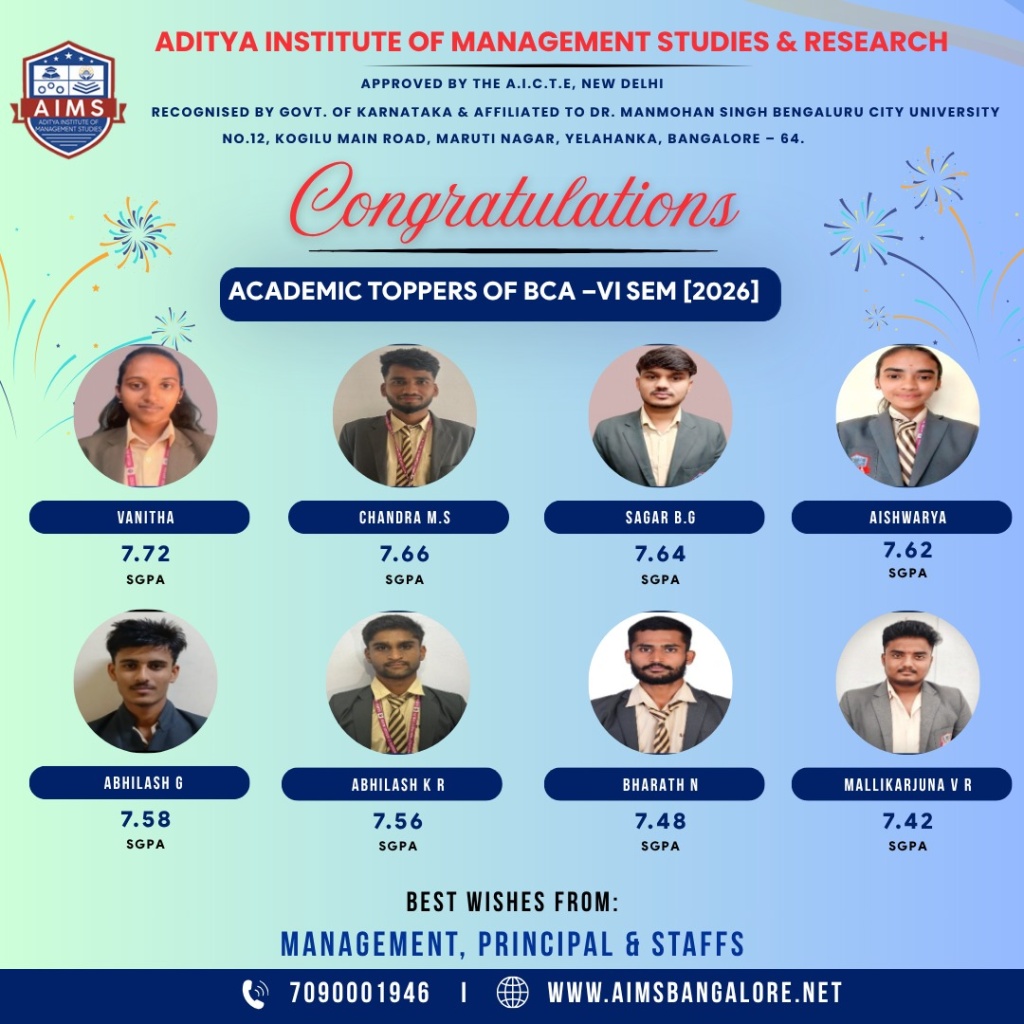
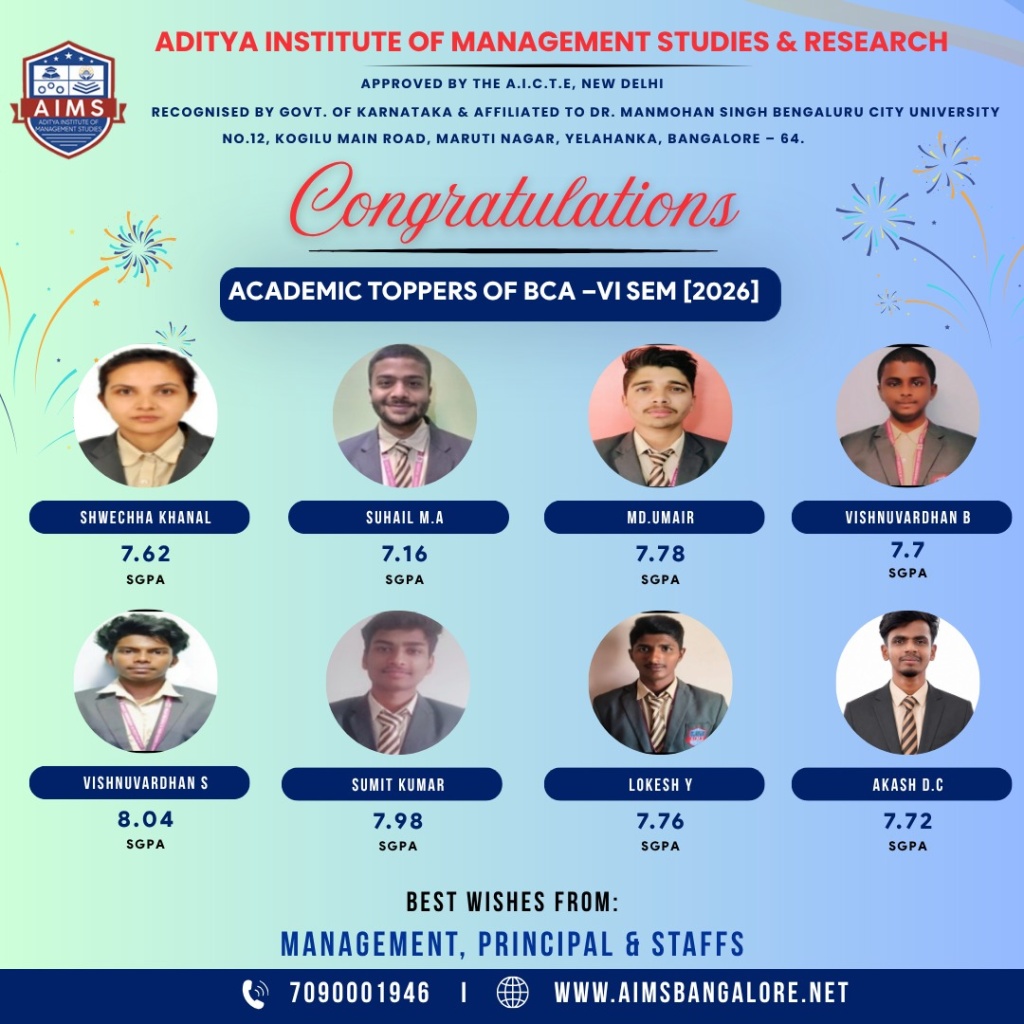
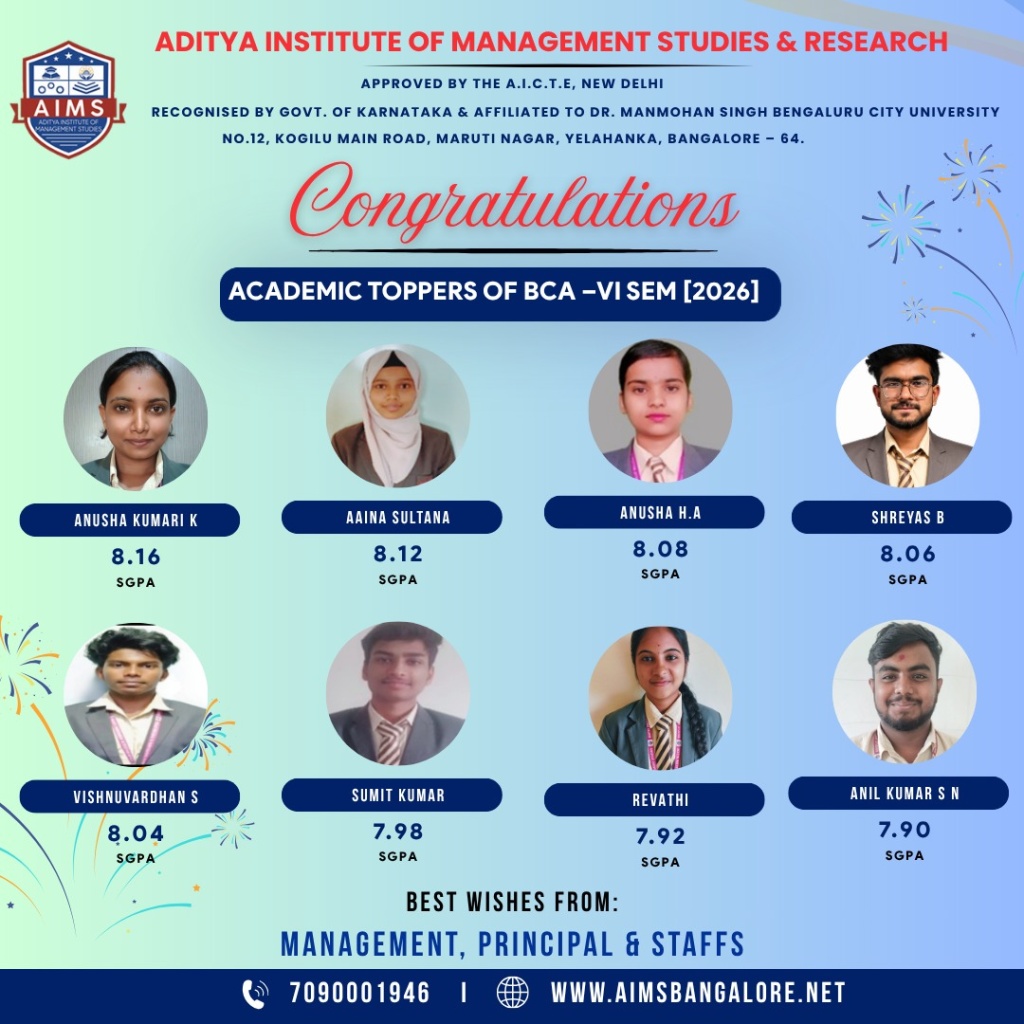
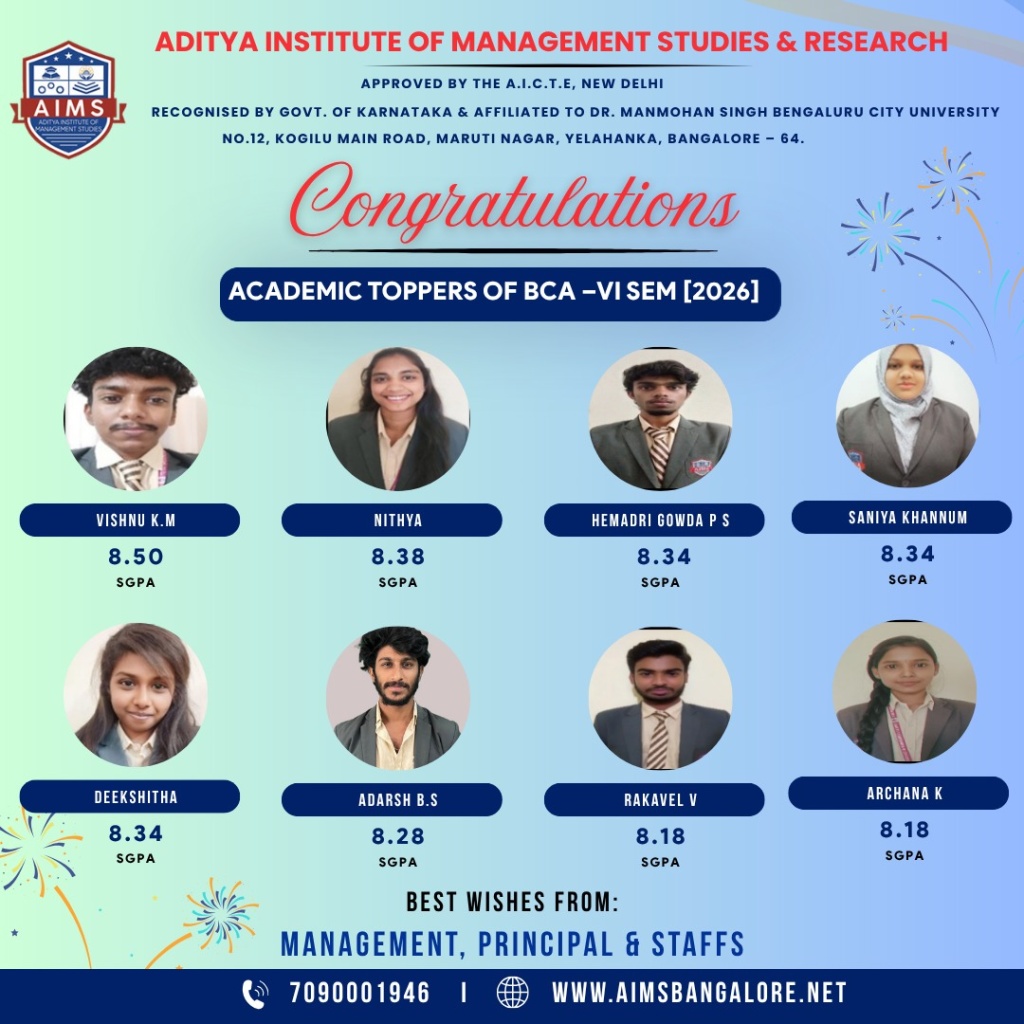
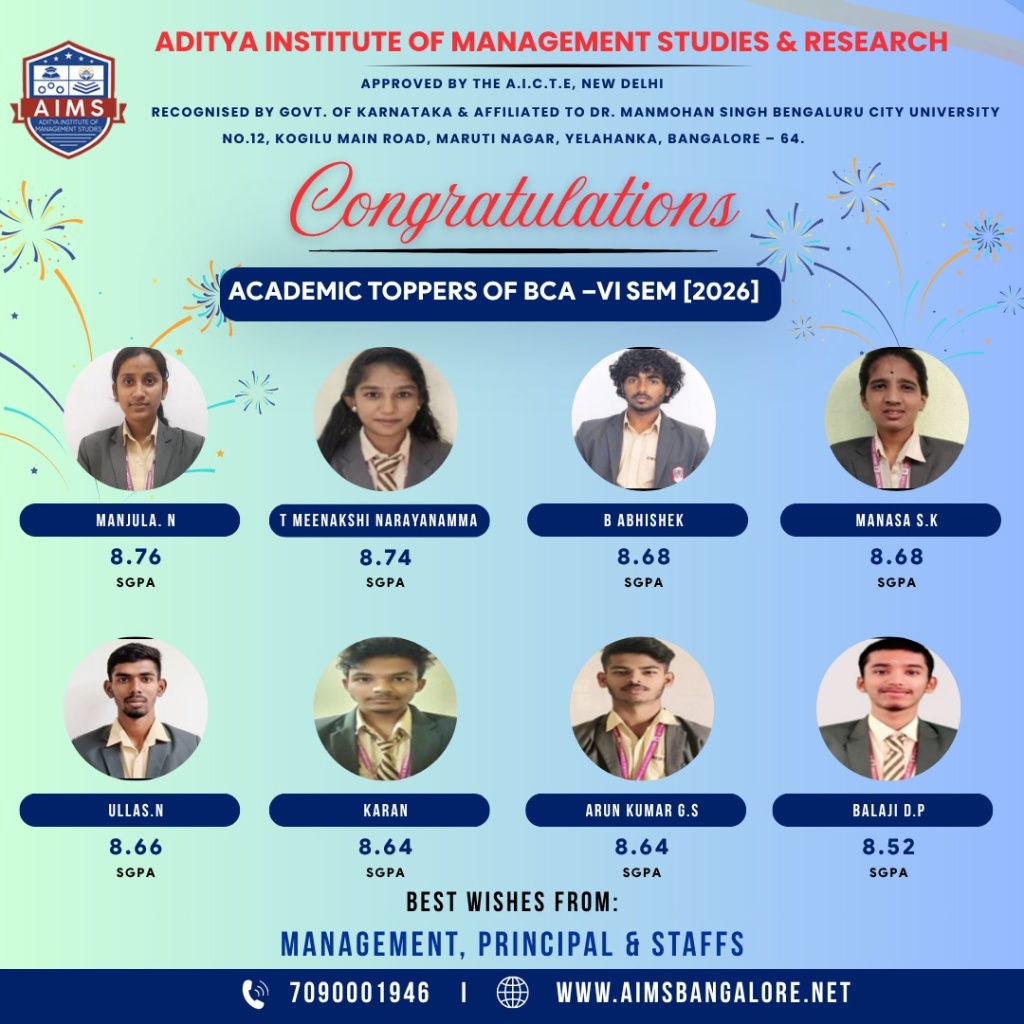
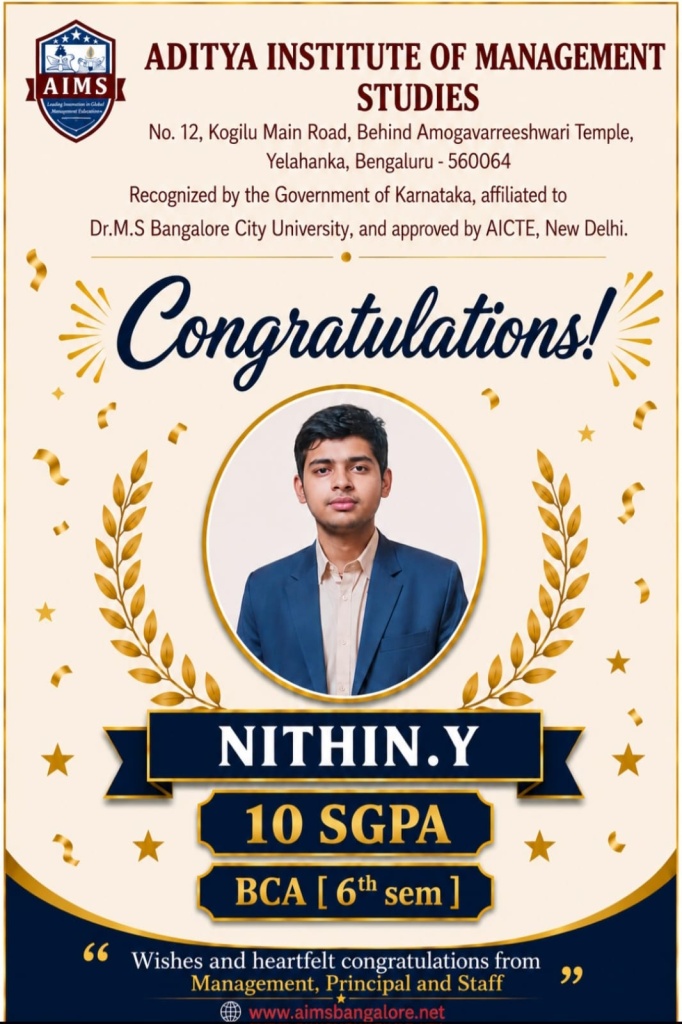
Congratulations to all the Academic Toppers of BCA – VI Semester (2026)! Your remarkable achievement is a reflection of your dedication, perseverance, and commitment to academic excellence. May this success inspire you to continue striving for greater milestones in your educational and professional journey. Wishing you all the very best for a bright and successful future. Keep learning, keep growing, and continue making your institution proud.
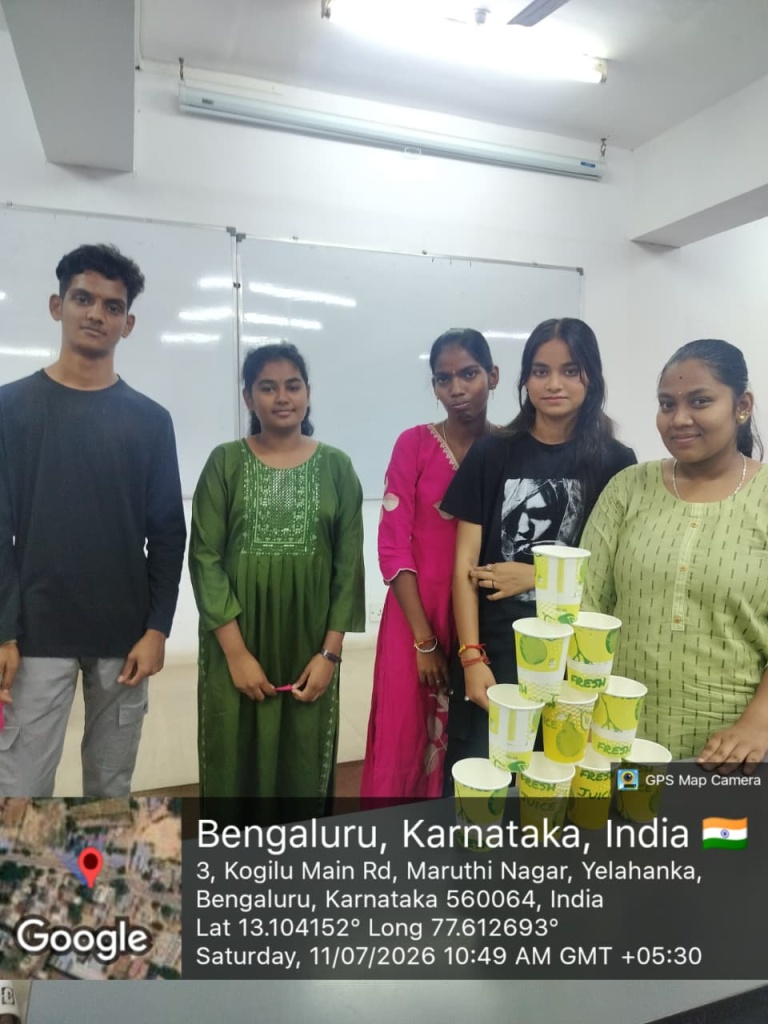
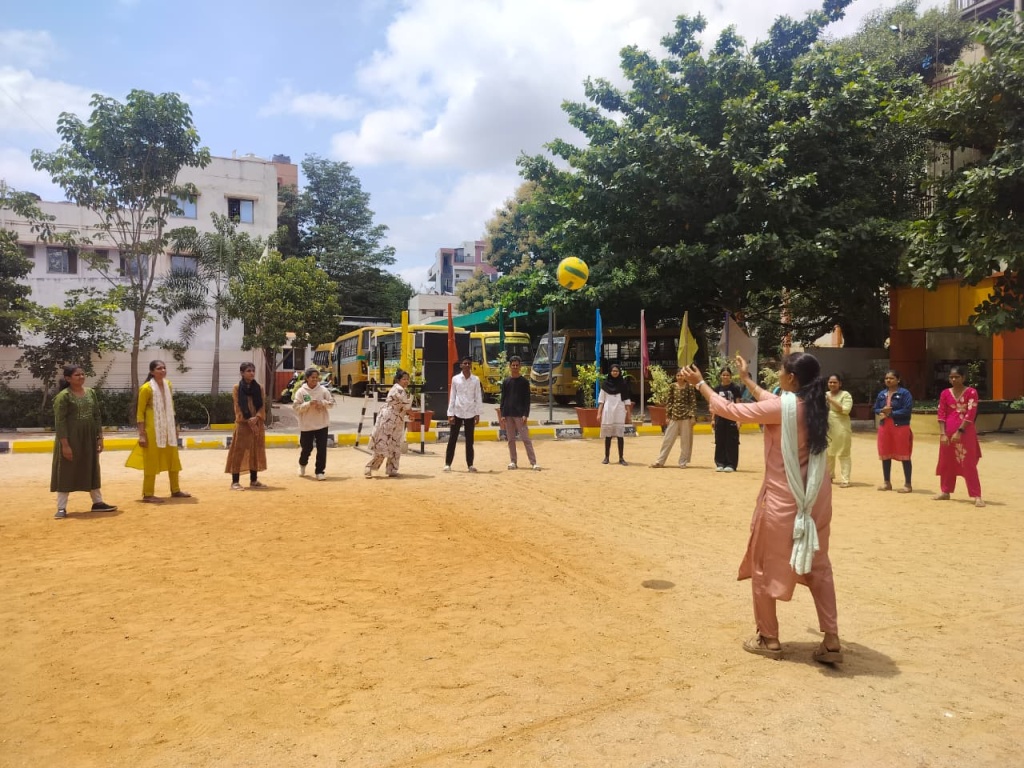
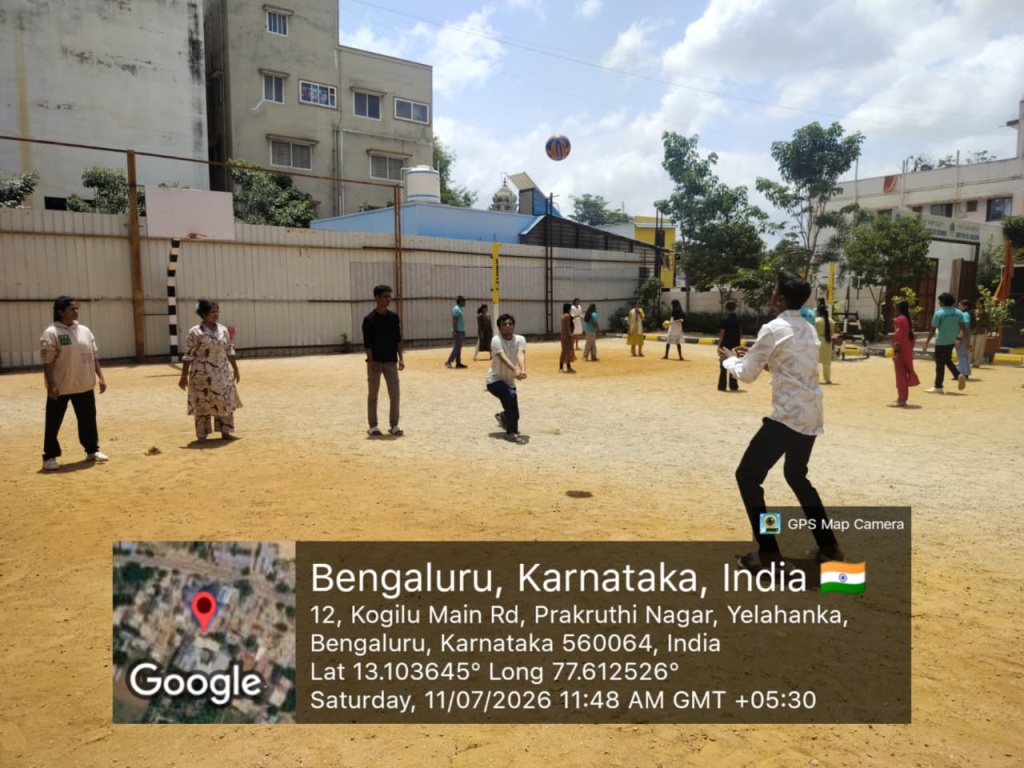
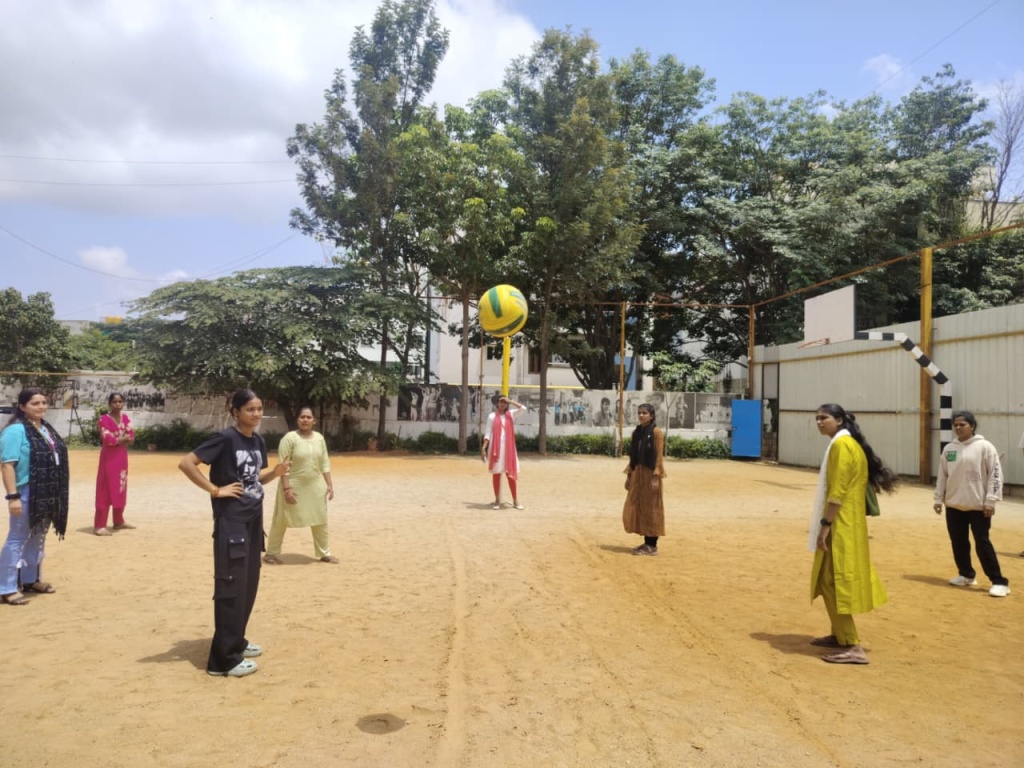
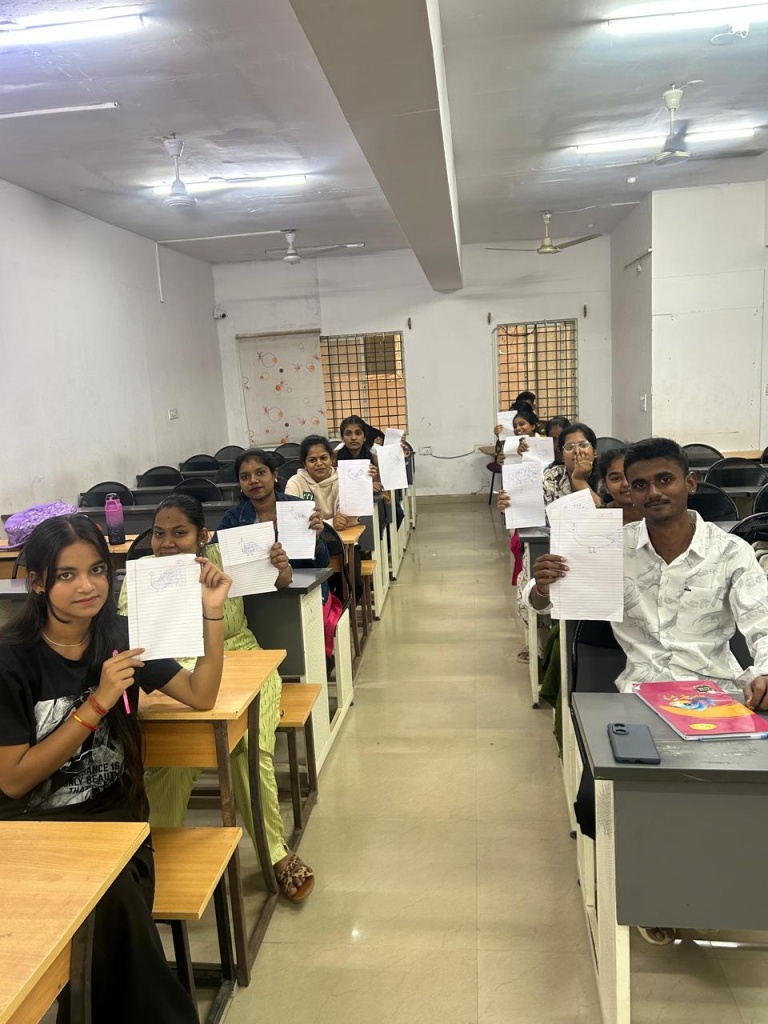
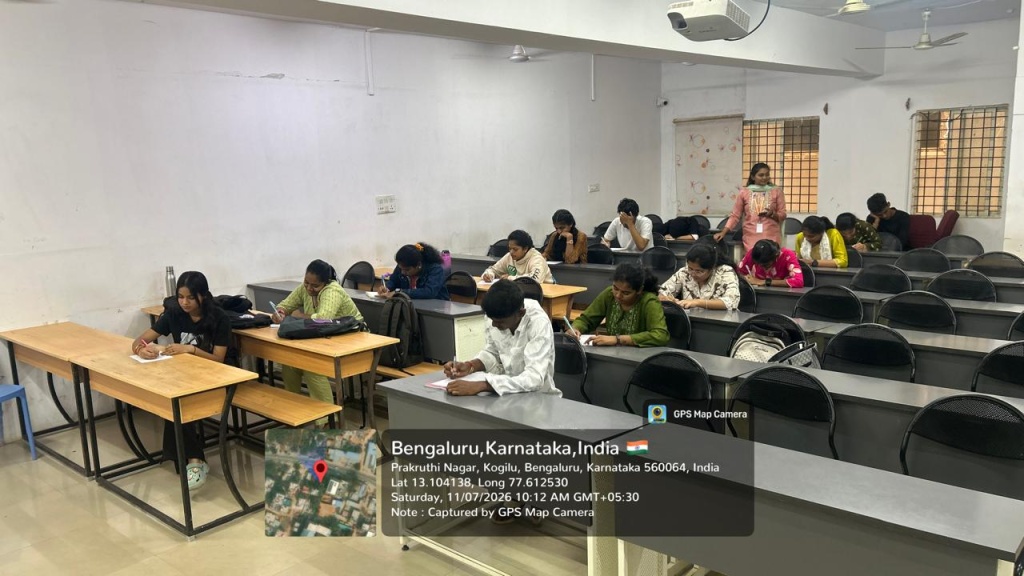
Date : 11:07:2026 (Saturday) Venue: AIMS Seminar Hall & Playground Timings : 10:00 am to 12:00pm
HIGHLIGHTS
As a part of UG Orientation programme for the academic year 2026-27, Games and sports were arranged to enhance team building ability and to boost their brain power. Fun Games like building tower using balloon and paper cups, guess the picture and Wrong answer only were conducted. Sports like volleyball and throwball were conducted to enhance their physical fitness and to create awareness about sports activities for a healthy lifestyle. Students participated in the all activities with enthusiasm and enjoyed the activities with all positive response.
OUTCOME
The games and sports organized during the UG Orientation Programme successfully fostered a positive and energetic start to the academic year 2026–27. The activities encouraged teamwork, communication, and healthy competition among the students. Strategic games enhanced critical thinking and problem-solving skills, while sports promoted physical fitness and overall well-being. The programme also helped participants build confidence and develop meaningful peer connections.
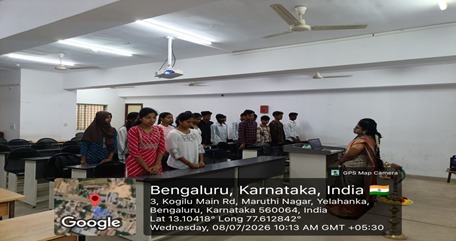
Topic : Yoga for Health and Well-being Date: 11/07/2026 Time: 9:00 AM – 10:00 AM As part of the UG Freshers Orientation Programme for the academic year 2026–2027, a Yoga for Health and Well-being session was organized to promote physical fitness, mental wellness, and a healthy lifestyle among the newly admitted students. The session aimed to emphasize the importance of maintaining a balanced mind and body, enabling students to adapt confidently to their new academic environment.
The session began with a brief introduction highlighting the significance of yoga in improving overall well-being, enhancing concentration, reducing stress, and developing self-discipline. Students were encouraged to adopt healthy habits and incorporate simple yoga practices into their daily routine to support their academic performance and personal growth.
The practical session included deep breathing exercises, gentle warm-up movements, neck, shoulder, wrist, and ankle exercises, followed by simple yoga postures such as Tadasana (Mountain Pose), Ardha Kati Chakrasana (Side Stretch), Forward Bend , Vrikshasana (Tree Pose). Students also practiced Anulom Vilom and Bhramari Pranayama , which helped them experience relaxation, improved focus, and inner calm. The session concluded with a short relaxation exercise, allowing participants to refresh both their body and mind. Students participated enthusiastically and followed the instructions with great interest. The session created a positive and energetic atmosphere, encouraging students to appreciate the importance of regular physical activity and mindful living.
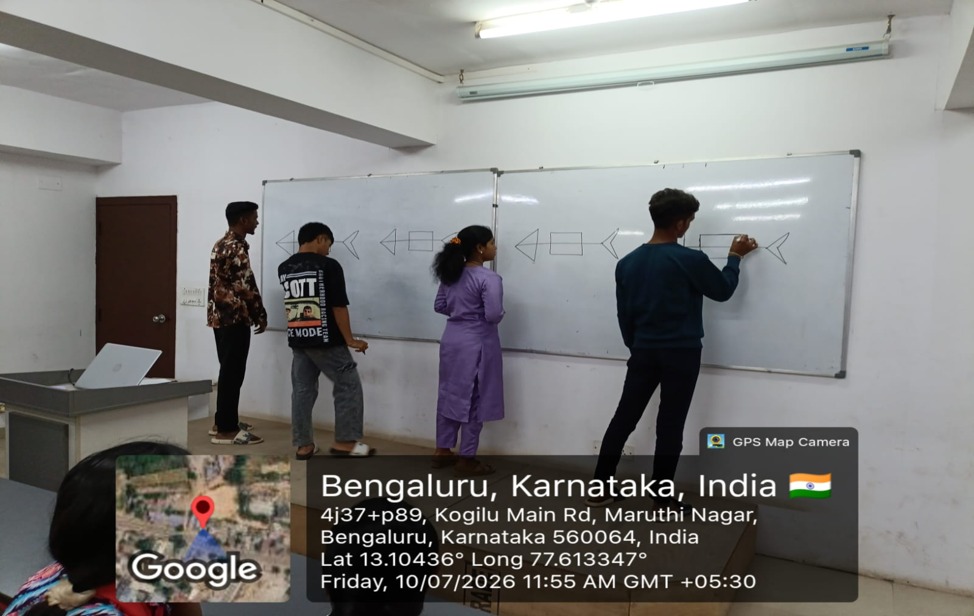
Aditya Institute of Management Studies and Research UG Freshers Orientation Programme (2026–2027) DAY 3 SESSION-4 TOPIC- Aptitude Session As part of the UG Freshers Orientation Programme for the academic year 2026–2027, an engaging Aptitude Session was conducted to introduce students to the significance of aptitude skills in academic excellence, competitive examinations, and career development. The session emphasized the importance of logical reasoning, analytical thinking, problem-solving abilities, speed, and accuracy, which are essential for higher education and the recruitment processes of leading organizations.
The session featured a series of interactive learning activities designed to encourage active participation. A live aptitude quiz was conducted to assess students’ cognitive abilities in a fun and competitive environment. Students also participated in logical reasoning puzzles that enhanced their analytical thinking and decision-making skills. Practical techniques and shortcut methods for solving quantitative aptitude questions efficiently were demonstrated, enabling students to understand effective problem-solving strategies within limited time.
In addition, students were introduced to the aptitude assessment process commonly used during campus recruitment and corporate hiring. The session provided valuable insights into the role of aptitude tests in placement processes and highlighted the importance of developing these skills from the early stages of their undergraduate studies. The session motivated students to begin preparing for competitive examinations and placement opportunities from the very beginning of their college journey.
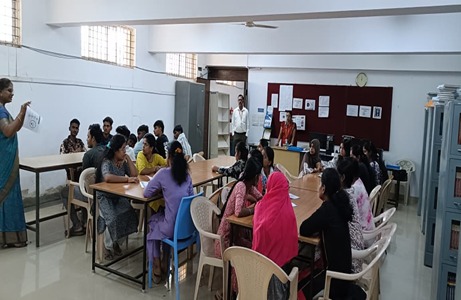
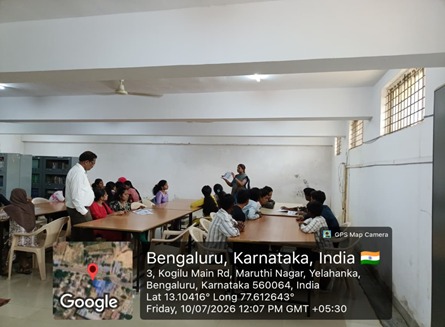
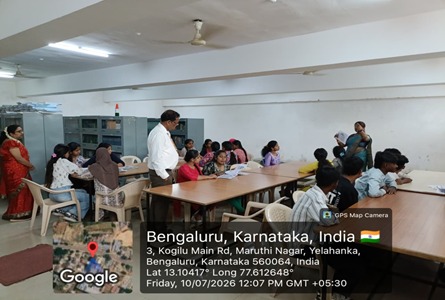
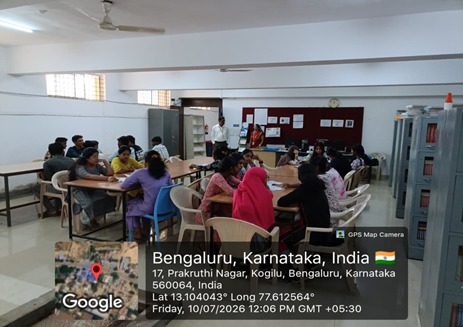
Aditya Institute of Management Studies and Research UG Freshers Orientation Program 2026-2027 DAY 3 Session- 3 As part of the UG Freshers Orientation Programme for the academic year 2026–2027 Library Familiarization Session was conducted on 10 July 2026 at the AIMS Library to familiarize newly admitted students with the library’s facilities, resources, and services.
The library is regarded as the heart of an educational institution, playing a vital role in supporting teaching, learning, research, and the overall academic development of students. The orientation session aimed to help freshers understand the effective use of library resources and encourage them to develop regular reading and research habits.
During the session, students were introduced to the library’s collection of textbooks, reference books, journals, magazines, newspapers, digital resources, and other learning materials. They were also briefed on library membership, borrowing and return procedures, library rules and regulations, the organization of books, and the various services available to support their academic needs.
The Library Orientation Programme successfully familiarized students with the facilities, resources, and services offered by the AIMS Library. It enhanced their awareness of library practices, encouraged independent learning, and motivated them to make optimum use of the library for academic excellence and lifelong learning.
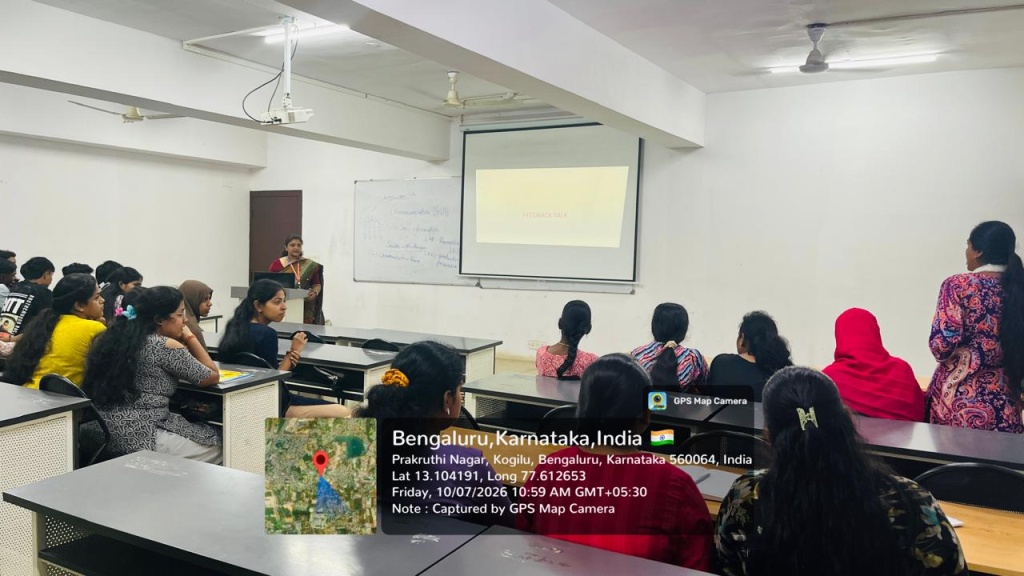
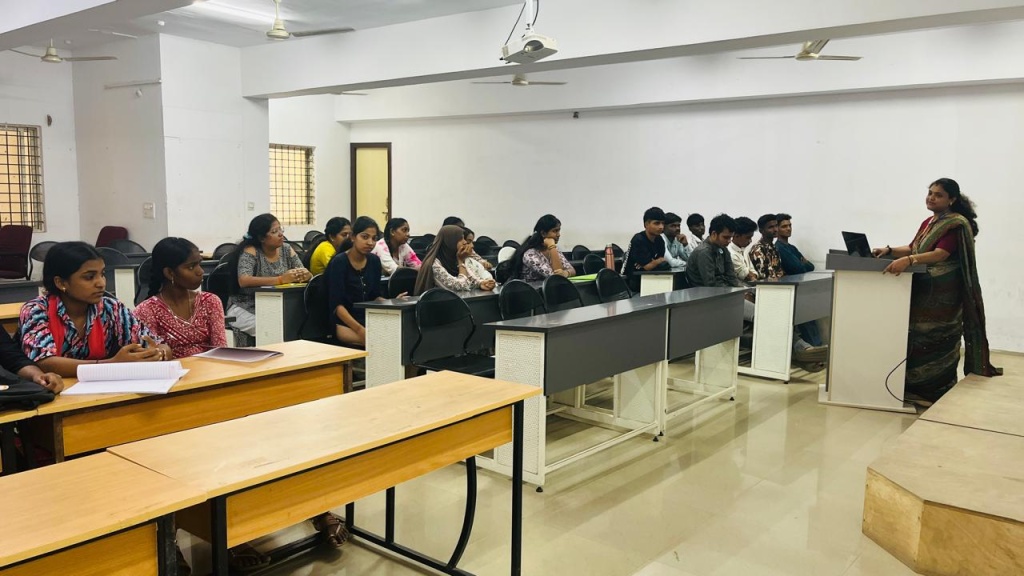
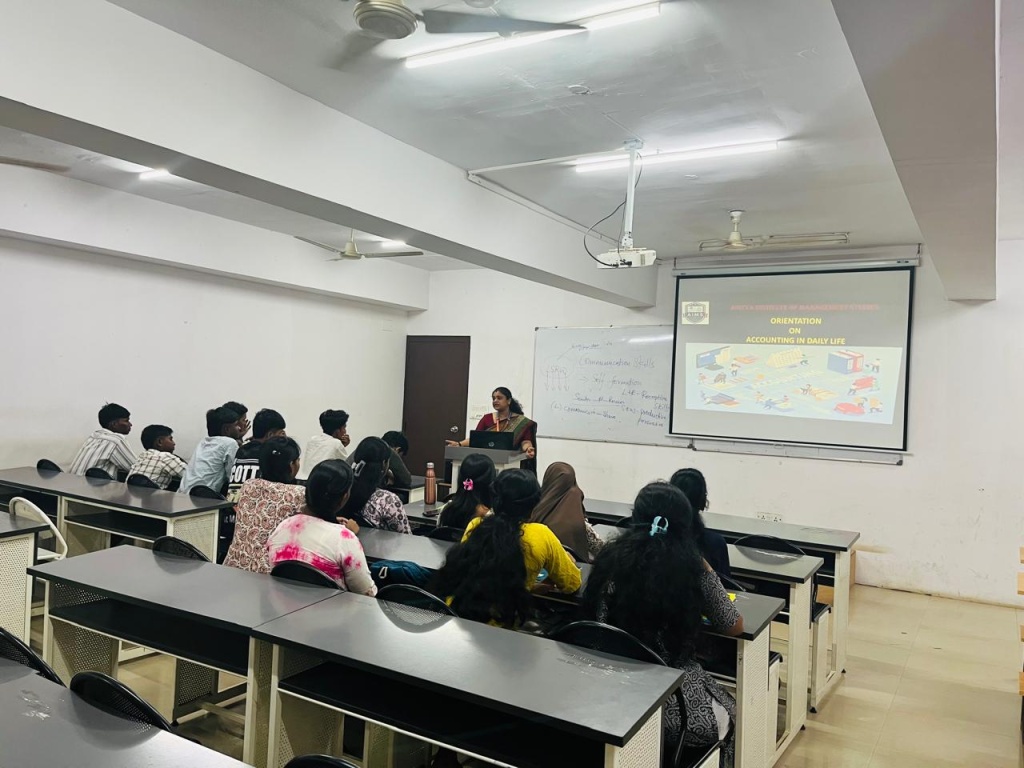
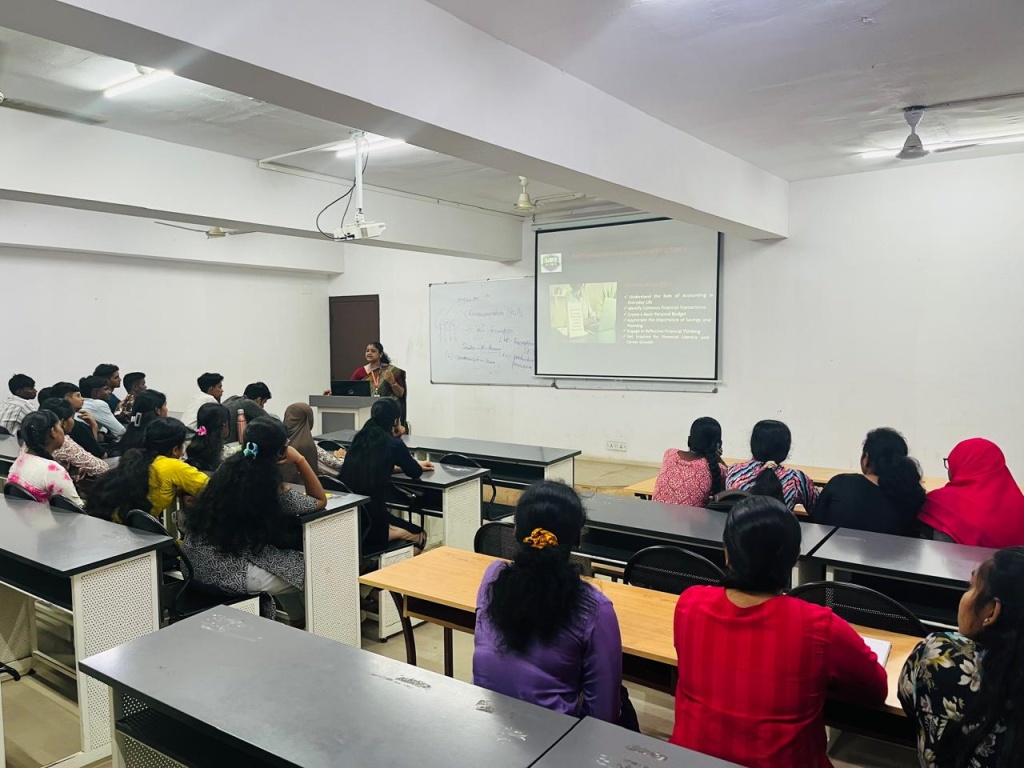
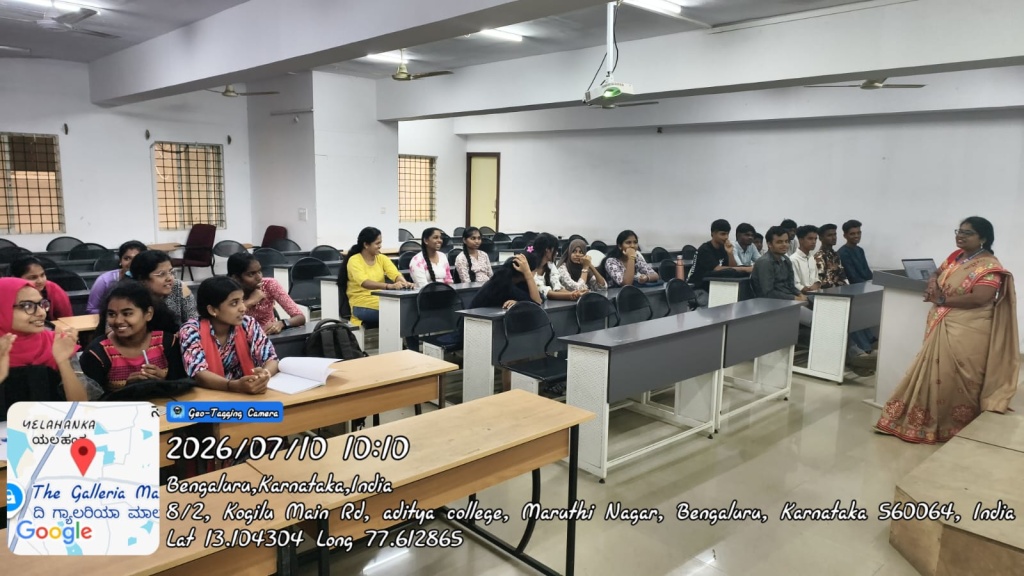
Aditya Institute of Management Studies and Research UG Freshers Orientation Programme (2026–2027) DAY 3 Session 2 Topic- Accounting in Daily Life As part of the UG Freshers Orientation Programme for the academic year 2026–2027, an informative session on Accounting in Daily Life was conducted to introduce students to the practical relevance of accounting and the importance of managing personal finances effectively. The session emphasized that accounting is not only an academic subject but also an essential life skill that supports informed financial decision-making.
The programme began with an introduction to the role of accounting in everyday life, encouraging students to relate accounting concepts to routine financial activities such as managing pocket money, making digital payments, tracking daily expenses, and planning savings.
To make the session interactive and engaging, several activities were conducted. An ice-breaker activity titled “Needs vs. Wants Showdown” encouraged students to distinguish between essential and non-essential expenses, promoting responsible spending habits. This was followed by a discussion on common financial mistakes made by students, including impulse buying, poor budgeting, inadequate savings, and the lack of expense tracking, along with practical strategies to overcome these challenges.
Students were also introduced to simple digital tools used for personal financial management, including UPI transaction records, expense-tracking applications, Google Sheets, and Microsoft Excel for budgeting. The session concluded with an interactive feedback discussion, where students shared their key takeaways and reflected on the importance of financial discipline.
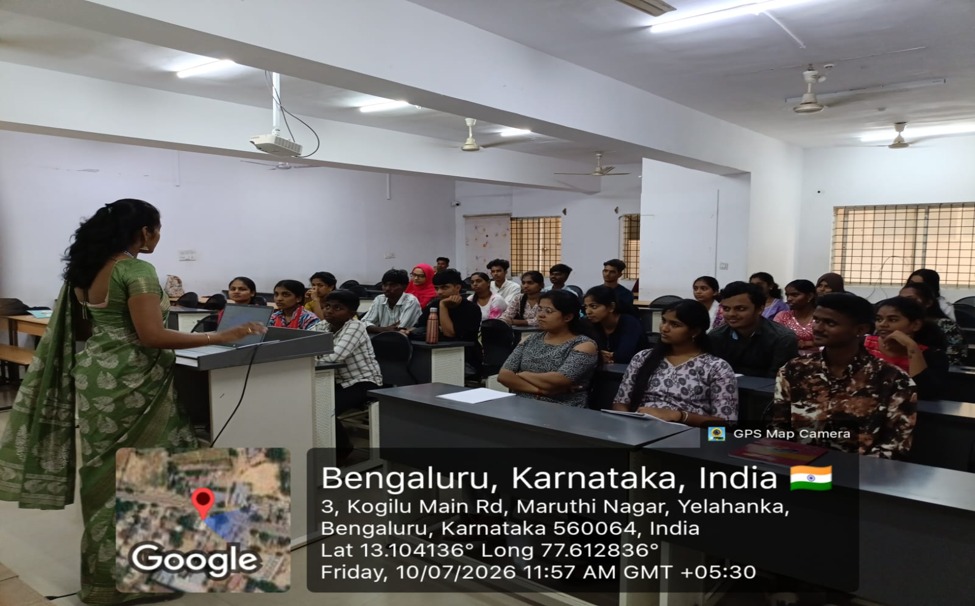
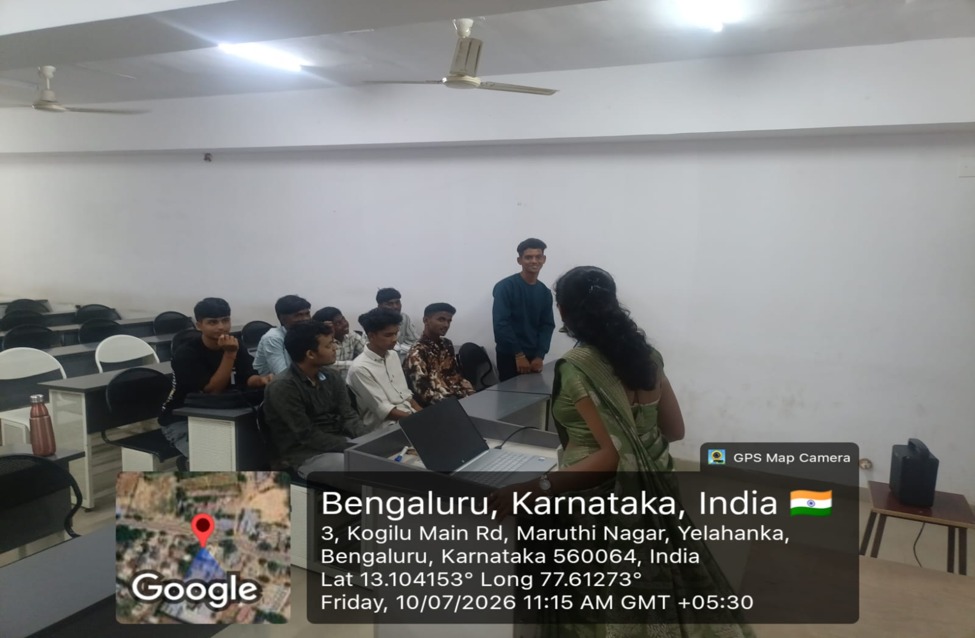
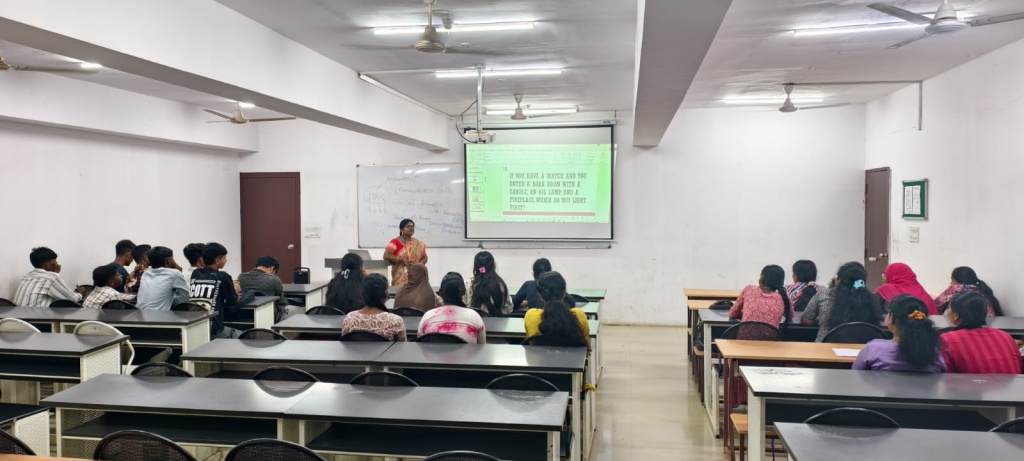
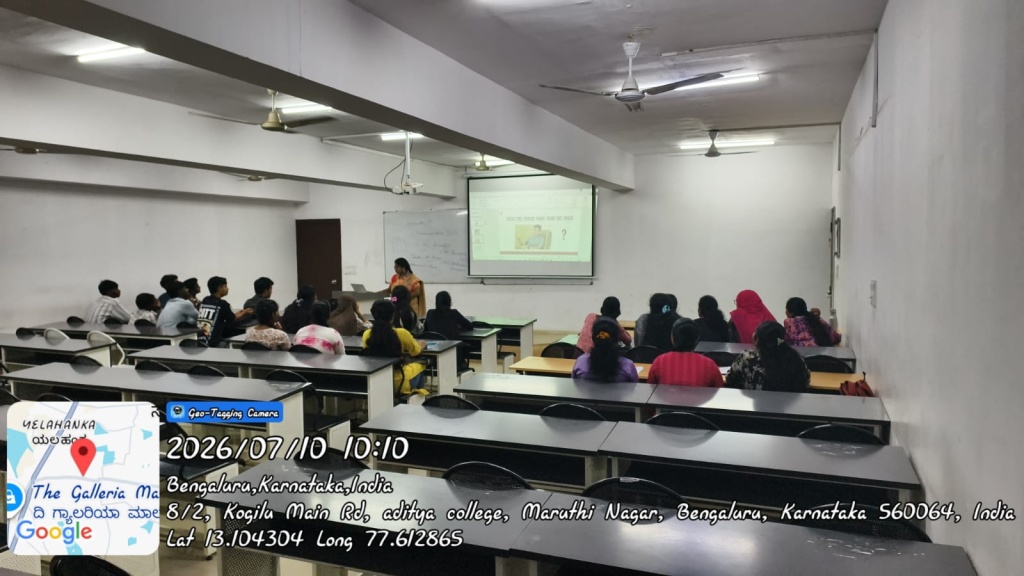
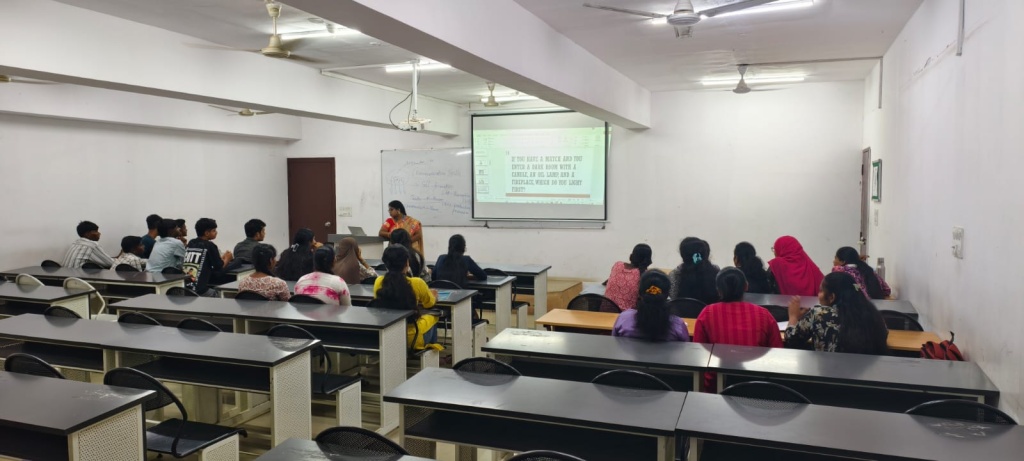
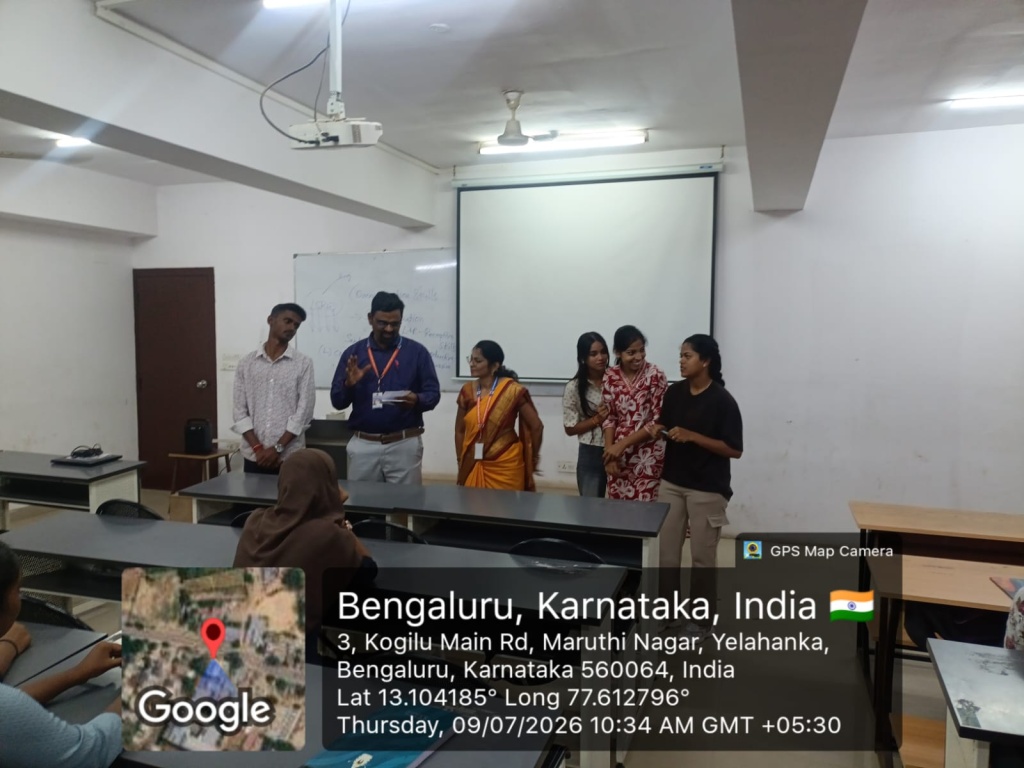
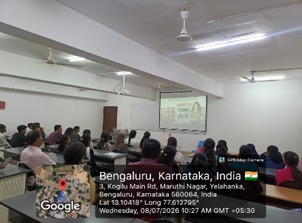
DAY 3 Date: 10/07/2026 Session – 1 Topic: Computer Skills As part of the UG Orientation Programme for the academic year 2026–27, an engaging session on Computer Skills was conducted to familiarize newly admitted students with the essential computer knowledge and digital competencies required for their academic journey. The session emphasized the importance of basic computer applications, digital literacy, and the effective use of technology in higher education.
To make the learning experience interactive and enjoyable, a variety of activities were organized, including role play, a quiz, and an ice-breaking session. The role-play activity enabled students to demonstrate their understanding of everyday computer-related situations while enhancing teamwork and communication skills. The quiz provided an opportunity to assess their basic computer knowledge in an enjoyable and competitive environment,encouraging active participation. The ice-breaking activity, conducted through a Memory Chain Game, helped students interact with their peers, improve memory skills, and build confidence in a friendly atmosphere.
The students participated enthusiastically in all the activities, making the session lively and engaging. Overall, the programme successfully created awareness about the significance of computer skills, encouraged collaborative learning, and helped students begin their academic journey with greater confidence and enthusiasm.
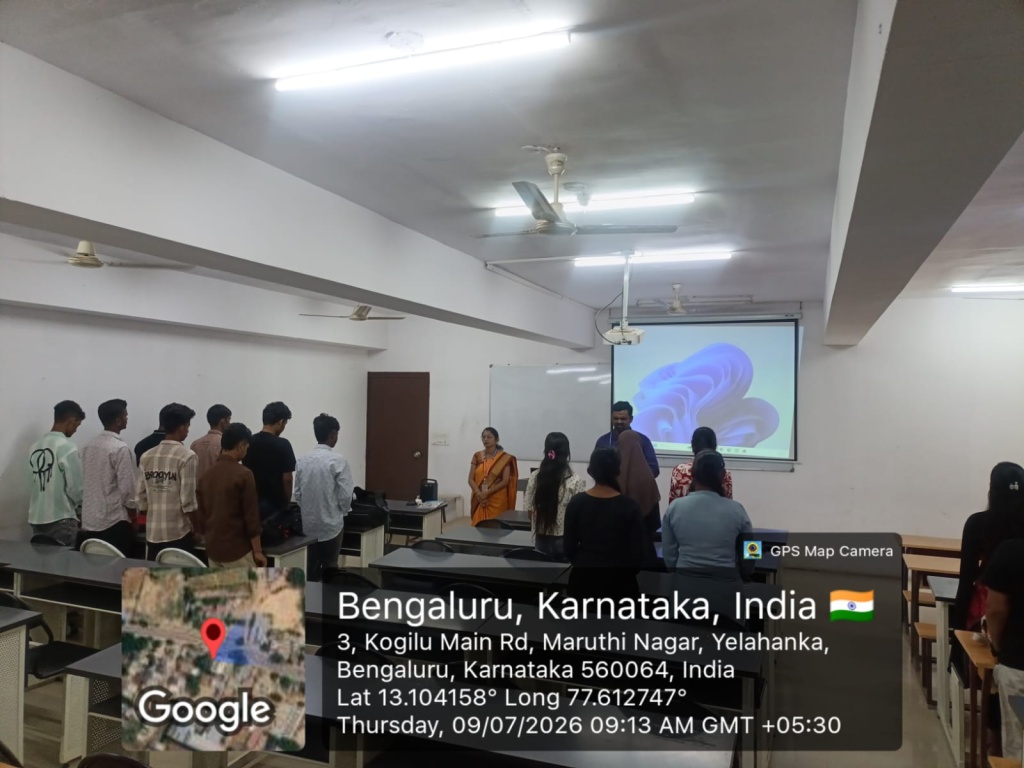
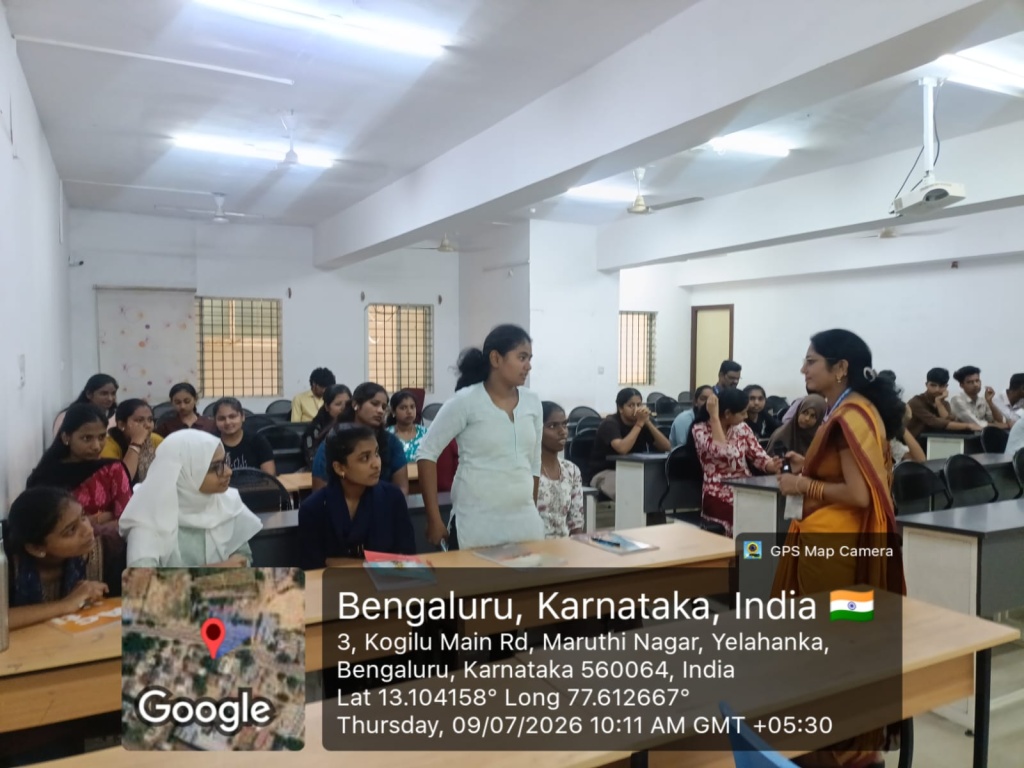
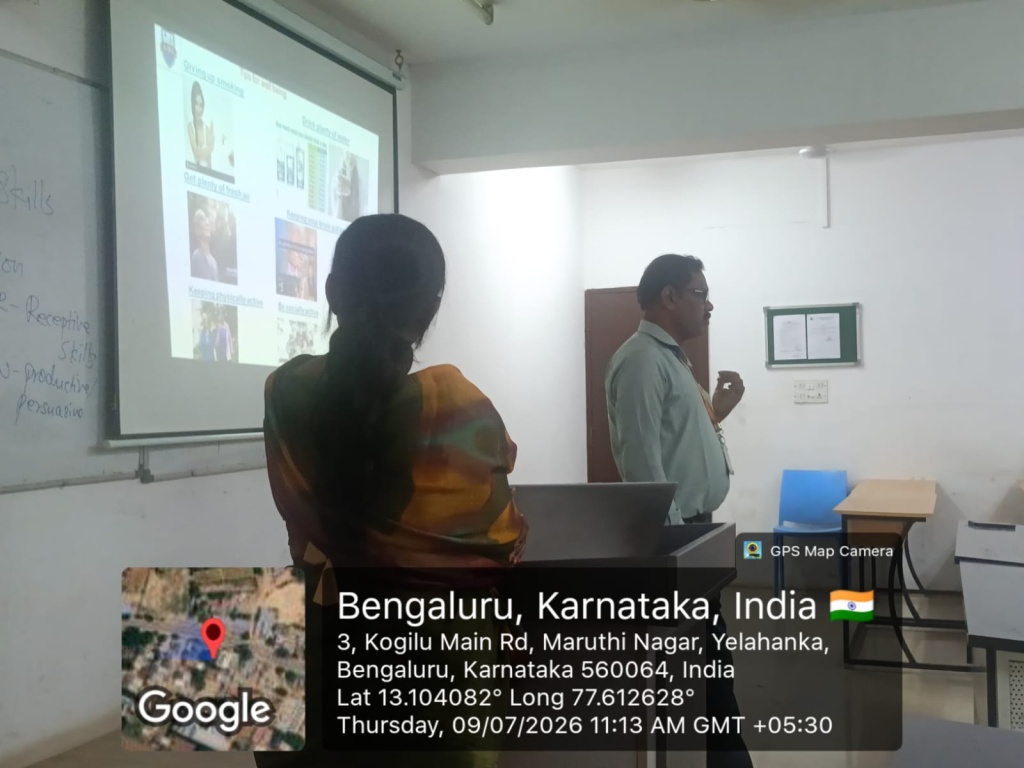
Date: 09 July 2026 (Thursday) Session: 02 Topic: Communication Skills The second session focused on self-formation, personality development, and effective communication skills. Students were encouraged to assess and enhance their communication abilities to excel in both academic and professional environments. The session introduced the four fundamental communication skills—Listening, Reading, Speaking, and Writing (LRSW)—along with their significance, benefits, and practical applications. An overview of the General English syllabus, including both language and literature components, was also presented. Students actively participated by sharing their understanding of communication and engaging enthusiastically in the discussions.
The second session highlighted the importance, richness, and historical background of the Kannada language. Emphasis was placed on strengthening writing and speaking skills, recognized as productive language skills, and students were encouraged to develop these competencies for effective communication and cultural appreciation.
The day’s programme concluded with a Library Observation Activity, during which students from various departments explored the library facilities, resources, and services. The activity helped familiarize the freshers with the academic resources available on campus and encouraged effective utilization of the library throughout their academic journey.
Overall, the second day of the Orientation Programme was informative, interactive, and engaging. The sessions enhanced students’ understanding of communication skills, language learning, and the effective use of library resources, laying a strong foundation for their academic success.
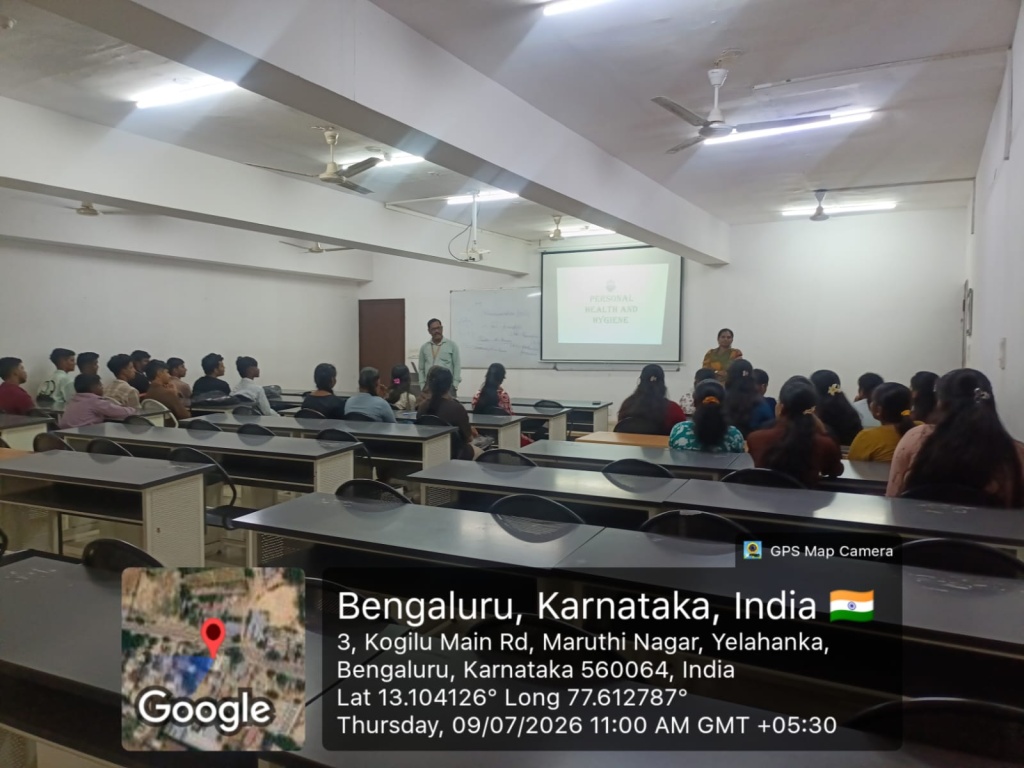
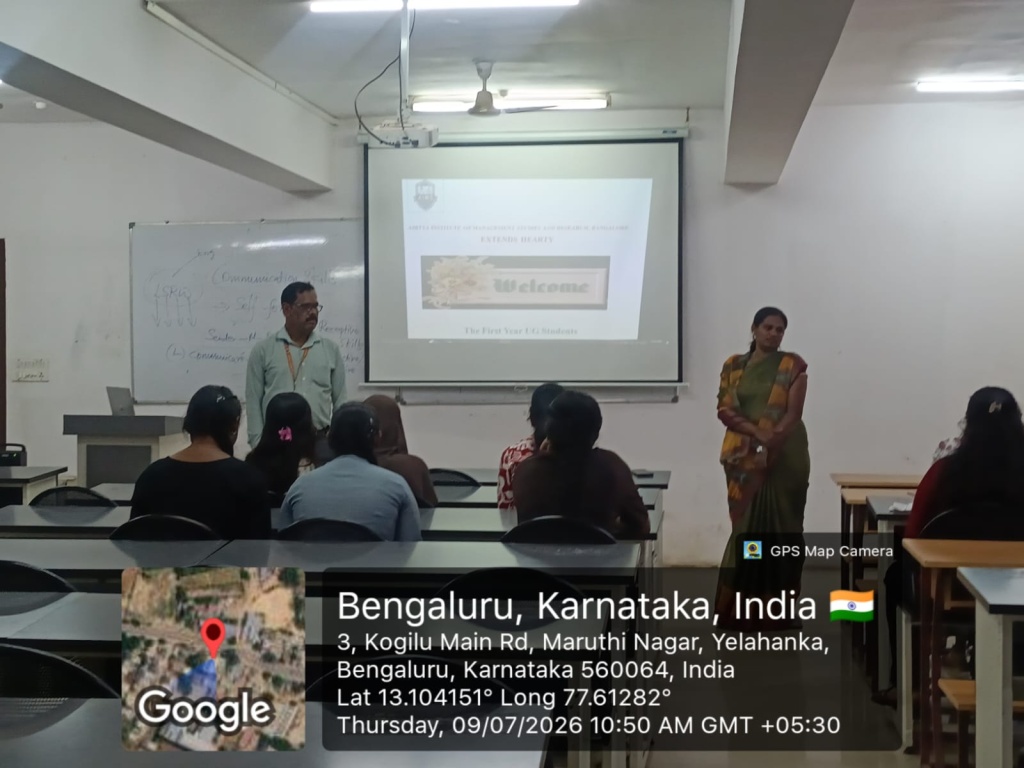
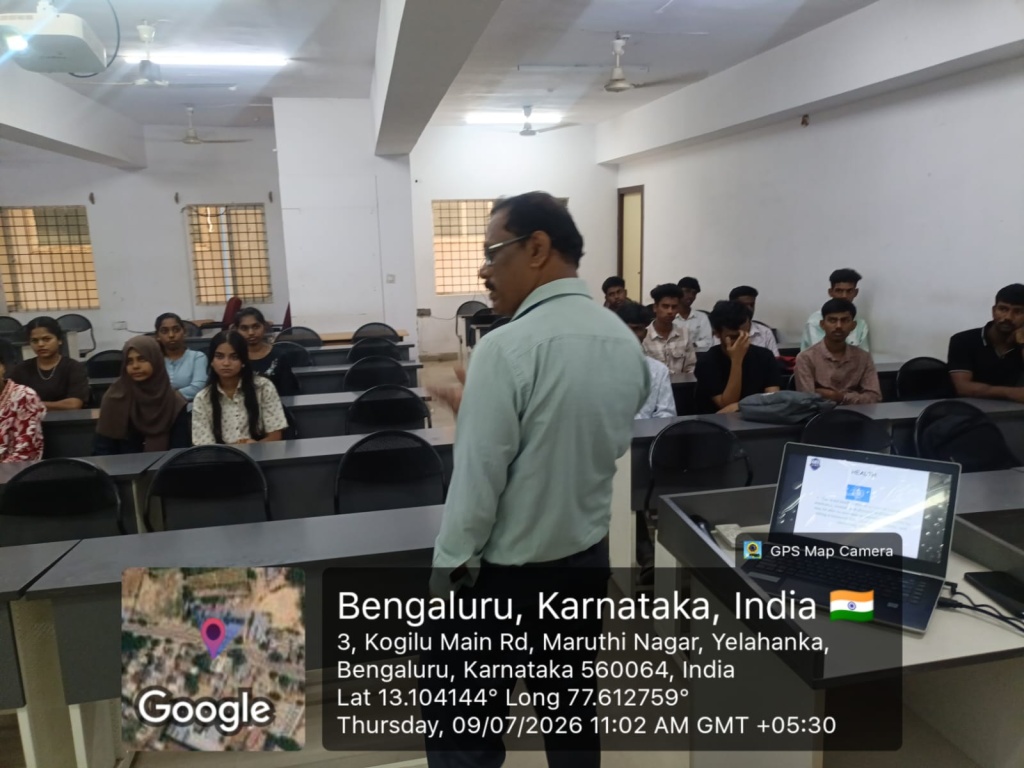
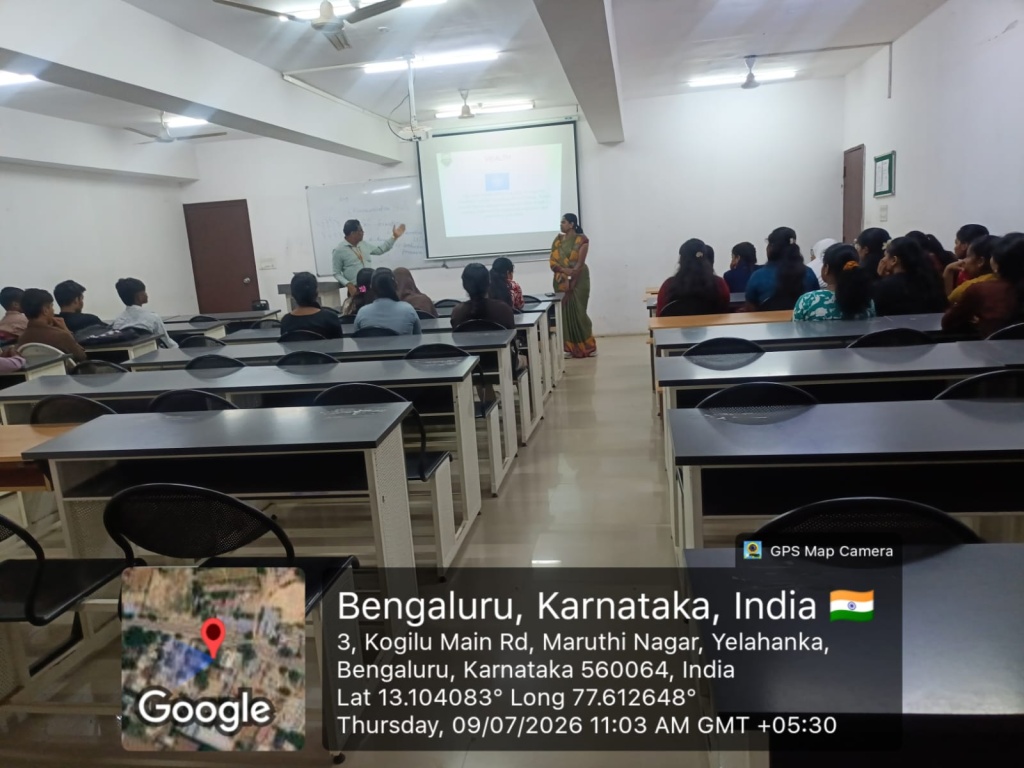
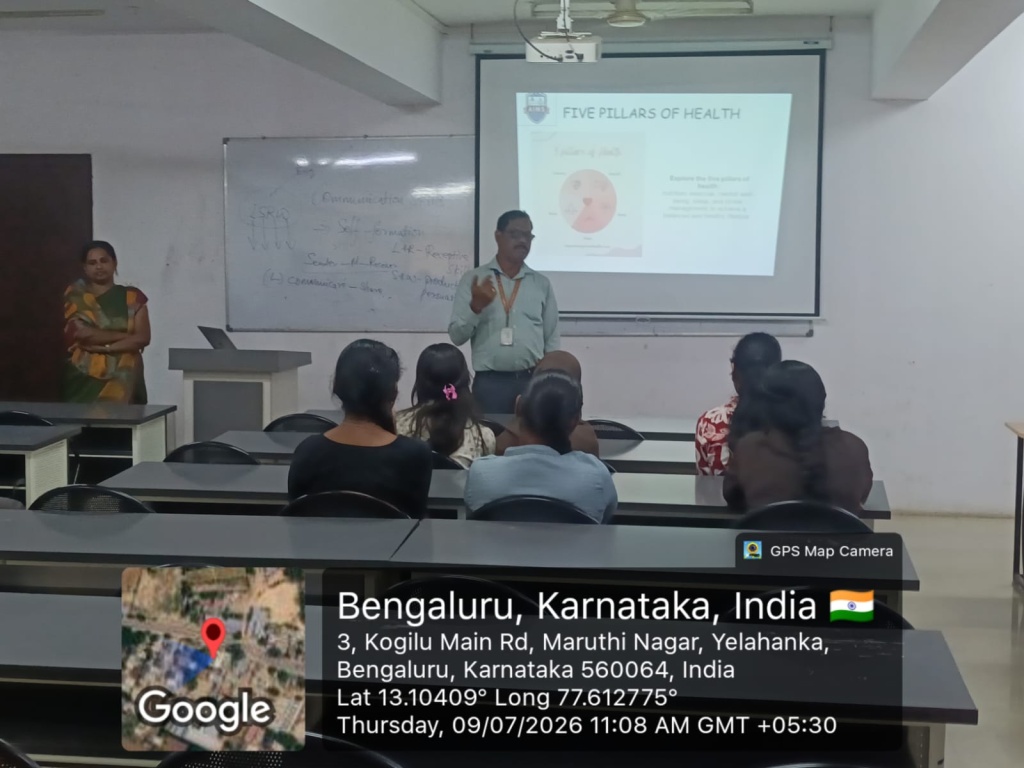
Date: 09 July 2026 (Thursday) Topic* :Health and Hygiene
As part of the UG Orientation Programme for the academic year 2026–27, a highly informative session on Health and Hygiene was conducted to create awareness among newly admitted students about the importance of maintaining physical, mental, and social well-being. The session highlighted that good health is the foundation for personal growth, academic success, and responsible citizenship.
The programme began with an introduction to the concept of health as defined by the World Health Organization (WHO). Students gained valuable insights into the meaning of health, its significance in everyday life, and practical ways to maintain a healthy lifestyle through balanced nutrition, regular exercise, adequate rest, stress management, and positive habits.
The session also emphasized the importance of personal and environmental hygiene. Students were educated on daily hygiene practices, the role of cleanliness in preventing infections, and how poor hygiene can lead to the spread of harmful microorganisms and diseases. Practical tips on maintaining cleanliness at home, on campus, and in public spaces were shared to encourage healthy and responsible living.
The session was interactive and engaging, motivating students to adopt healthy habits that support both their academic journey and overall well-being. It successfully reinforced the importance of health and hygiene as essential elements of a productive, disciplined, and fulfilling student life.
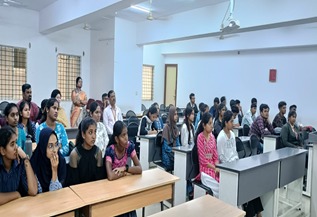
Aditya Institute of Management Studies & Research (AIMS) warmly welcomed the newly admitted students of BCA, B.Com, BBA, and BBA Aviation through an inspiring UG Fresher’s Orientation Programme.
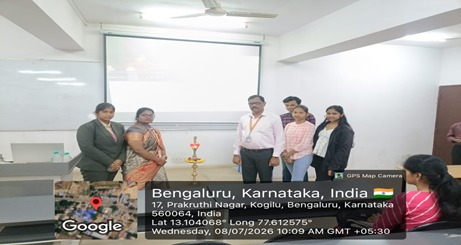
The programme commenced with a prayer and the ceremonial lighting of the lamp by the Heads of Departments and faculty members, symbolizing the beginning of a new academic journey filled with knowledge and success.
The welcome address by Mrs. Sangeetha R., Head of the Department, BCA, was followed by an inspiring session by Dr. Nagaraja Y. P., who motivated students to embrace discipline, academic excellence, effective communication, technical skills, and active participation in campus life.
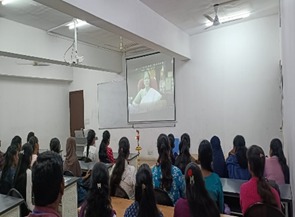
Students were introduced to the faculty members and gained valuable insights into the academic curriculum, examination process, attendance requirements, internships, placements, and the wide range of facilities available at AIMS. A captivating college presentation showcased the vibrant campus, modern infrastructure, student achievements, and numerous opportunities for holistic development. Outcome The orientation programme successfully familiarized students with the AIMS ecosystem, strengthened their confidence, and inspired them to make the most of the academic, co-curricular, and professional opportunities available. The event laid a strong foundation for a meaningful and successful college journey.
 +91 9620349000, +91 7090001946,
 For Admissions: enquiry@adityaedu.net,